REPORT ON COP 31- the Last Dying Gasp of Dinosaur Culture
By Rachel Elion Baird, SERVAS INTERNATIONAL Main Representative to the United Nations, New York
CIVIL SOCIETY MOMENTUM, THE POSITIVE.
The Civil Society Events of COP 31 were an example of the growing movement of global youth towards collective innovative solutions and strategies for a future sustainable world.
Countless representatives from Civil Society: Both NGOs and Entrepreneurs, coalitions and caucuses for climate justice, most youth, gathered together to strategize and promote a future that is not destroying Earth and generating positive climate action.
Youth, NGO, and Entrepreneurial Momentum
- Advocacy for Fossil-Free Zones. Youth organizations and civil society coalitions—including groups such as Plant-for-the-Planet and WWF International—used the summit to campaign for designated Fossil-Free Zones that halt new oil, gas, and coal expansion in ecologically sensitive areas.
- Building green economic infrastructure. Through programs like the Youth Ecopreneur Programme (YECO), young entrepreneurs showcased scalable business models focused on land restoration, sustainable livelihoods, and decentralized renewable energy access.
THE OFFICIAL CONFERENCE, THE NEGATIVE.
Several specific grievances drove the backlash from civil society organizations:
- Removal of fossil fuel language. Co-hosts Turkey and Australia faced heavy criticism from activists and leaders after releasing a shortened draft "cover decision" that stripped out references to fossil fuels—undoing a landmark commitment made at COP28 to transition away from coal, oil, and gas—while keeping mentions of carbon capture and storage technology.
- Impasse on climate finance. Groups including Greenpeace, ActionAid, and the Women and Gender Constituency accused wealthy, developed nations (particularly the European Union) of blocking progress on adaptation finance, loss and damage funding, and a "just transition" mechanism for developing countries.
- Alleged bias from the COP31 Presidencies. During the CAN International media huddle, representatives from Indigenous Peoples’ Organizations and the Global Campaign to Demand Climate Justice accused the summit presidencies of failing to act as impartial facilitators, alleging the process favored wealthy nations over climate-vulnerable countries.
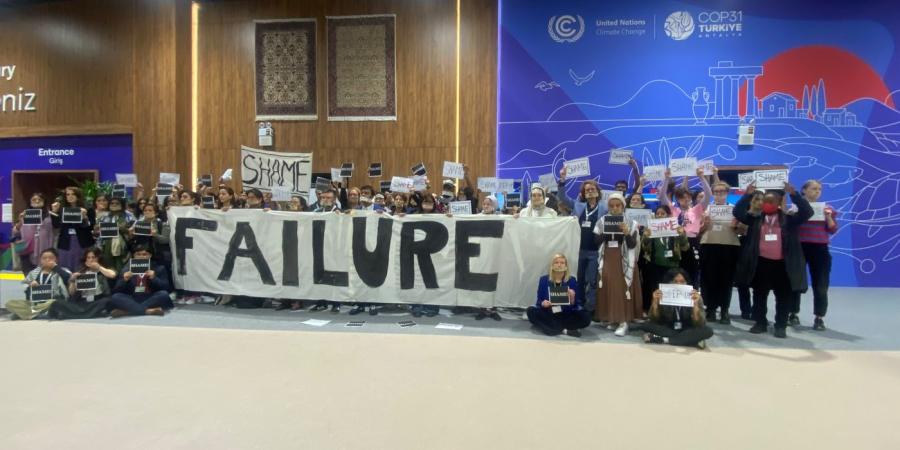
- Influence of fossil fuel lobbyists and restricted protest access. Earlier in the summit, activists protested the heavy presence of corporate polluters, noting that over 100 "Big Polluter" lobbying groups were admitted and outnumbered delegations from several vulnerable nations. At the same time, civil society groups criticized tightening restrictions on their own participation, including bans on holding protest actions inside the conference halls during the final two days.
- Absence of key world leaders. Activists also expressed frustration over the lack of political commitment demonstrated by the absence of major leaders, including the U.S. under the Trump administration and several European leaders from Germany, France, and Italy.
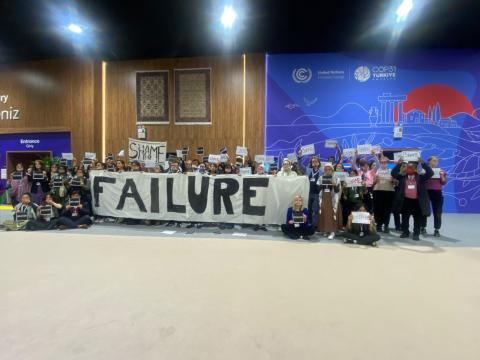
IS COP MOVING BACKWARDS?
- Calls for generational change. Youth delegates and grassroots activists, including coalitions like The Green Youth Movement, characterized national governments as outdated and overly tied to legacy fossil fuel interests. Advocates argued that because young people represent a growing demographic majority facing the long-term impacts of climate change, decision-making power and climate finance must shift away from stalled diplomatic processes toward community-led and youth-driven solutions.
- Frustration over diplomatic gridlock. Civil society observers pointed to the removal of fossil fuel phase-out language from the draft agreement and unresolved disputes over adaptation funding as evidence that formal UN consensus rules allow a small number of fossil-fuel-producing nations to block broader global progress.
CONCLUSION:
At COP 31 in Antalya, Turkey, discussions highlighted a sharp contrast between grassroots youth-led climate initiatives and deadlocked government negotiations, with youth movements and civil society groups arguing that traditional political institutions are failing to keep pace with a rapidly shifting global economy and the need to move faster to mitigate climate change.
See also
Join & support
Articles you might be interested in

International day of Peace 2023
2023-09-28
SI at Nuclear Ban Week in New York
2023-11-29
Servas Women- Who are we?
2024-11-06




Peace Week- Trees for Peace/SI UN T
2026-09-04
SI UN NY Event The Work of Peace
2026-09-05
Introducing NEW Servas Women Team
2026-09-19