Peace and disarmament stand as indispensable pillars of global harmony and security.
At its core, peace is not merely the absence of war but a dynamic state characterized by justice, equality, and respect for human rights. Achieving lasting peace requires concerted efforts at both national and international levels, encompassing diplomacy, conflict resolution, and the promotion of dialogue and understanding among diverse cultures and ideologies.
Sustainable peace cannot be attained without addressing the root causes of conflict, including poverty, inequality, and social injustice.
Disarmament, meanwhile, represents a proactive step towards preventing the devastating consequences of armed conflict.
However, the path to peace and disarmament is filled with challenges and obstacles. Deep-seated mistrust, vested interests, and geopolitical rivalries often impede progress towards meaningful disarmament agreements.
The pursuit of peace and disarmament represents a moral imperative and a strategic imperative for the future of humanity.
Servas International stands up for a world where the peaceful resolution of conflicts prevails over the logic of violence and war.
In 2022, Servas International became a formal partner in the International Campaign Against Nuclear Weapons (ICAN). This has given Servas a clear way to connect with other non-government organizations (NGOs) in this important global peacebuilding initiative.
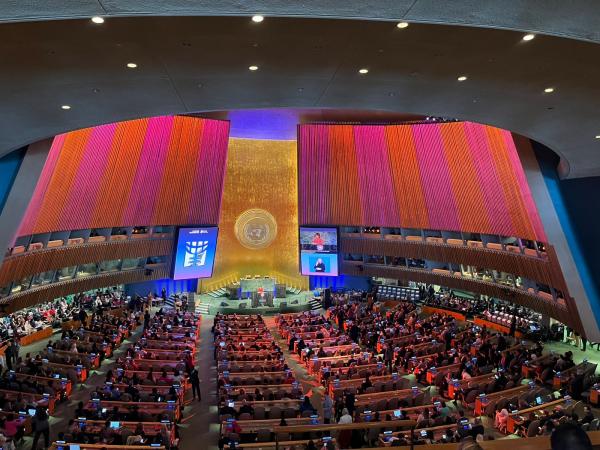
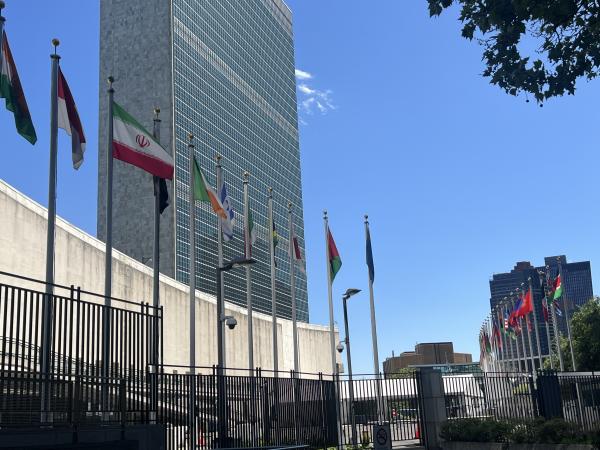
In the past few years, Servas members have attended meetings at the United Nations in Vienna and New York regarding the UN’s Treaty on the Prohibition of Nuclear Weapons (TPNW). The Treaty seeks to abolish all nuclear weapons and nuclear weapons testing around the globe.
In November 2023, Julie Cormack and Kent Macaulay (two of Servas International's Representatives to the United Nations in New York) attended the Second Meeting of States Parties to the Treaty. In the following video, Julie and Kent share the Treaty's contents and the ratification process by UN member states, the humanitarian consequences of nuclear weapons use and testing, the debate about nuclear deterrence versus common security, and possible roles that Servas and its members could play in regard to the treaty.
In March 2025, six Servas members (Hamsa Singh, Allison McCann, Angelika Hofmann, David Menham, Ann Frisch, and Kent Macaulay) attended the Third Meeting of States Parties to the Treaty. This meeting put a sharp focus on the ongoing harmful impacts that nuclear weapons testing has had on human health and the environment. The Servas group learned, networked and identified possible ways that all Servas members could become more involved in the global movement to prohibit nuclear weapons. They agreed that:
- Servas members could speak to their government officials about the urgent need to redirect funds from military spending and toward anti-poverty work, health, education and human services.
- Servas members could support and collaborate with Mayors for Peace and other like-minded peacebuilding non-government organizations and associations.
- Servas members could follow and consider lending financial support to alternative media that give voice to the anti-nuclear movement.
The next Meeting of the States Parties to the Treaty on the Prohibition of Nuclear Weapons will be at the UN in New York in late November 2026.
See also
Join & support
Articles you might be interested in

International day of Peace 2023
2023-09-28
SI at Nuclear Ban Week in New York
2023-11-29
Servas Women- Who are we?
2024-11-06


Peace Week- Trees for Peace/SI UN T
2026-09-04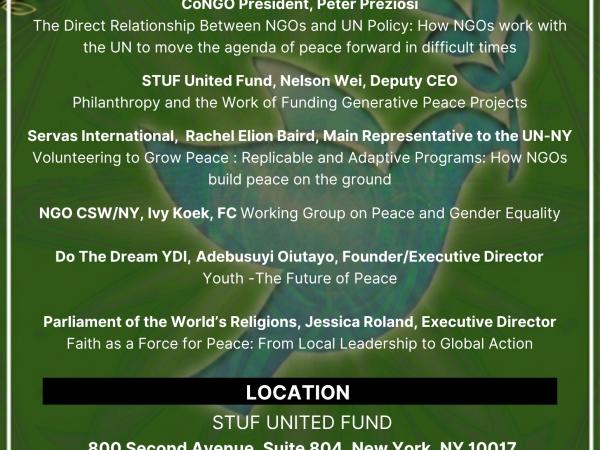
SI UN NY Event The Work of Peace
2026-09-05